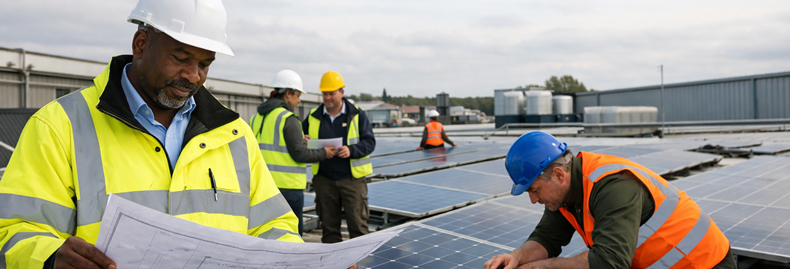
Why maintenance is part of the risk picture
Once a solar system is installed, it becomes part of the building rather than a one-off project. Panels, cabling, and equipment remain in place for many years, which means access and upkeep need to be considered from the outset. The question is not whether maintenance is required, but how it will be carried out safely and consistently over time.
Safe access to the roof
Routine access is needed for inspection, cleaning, and occasional repair. On some buildings this is straightforward, using fixed ladders or internal access points. On others, temporary access arrangements may be required each time work is carried out.
Insurers often look at how access is managed in practice. Safe routes, edge protection, and controlled entry points reduce the likelihood of incidents during routine visits.
Working around installed equipment
Solar panels cover significant areas of roof space, which can change how maintenance tasks are carried out. Access routes between panel arrays, spacing around equipment, and designated walkways all influence how easily the roof can be navigated.
Where these are not considered early, routine work such as gutter cleaning or roof inspection can become more difficult and potentially less safe.
Inspection and fault detection
Electrical components and connections benefit from periodic checks. Loose connections, damaged cables, or degradation over time can develop gradually rather than suddenly. Early detection reduces the likelihood of more serious issues.
Monitoring systems may also be used to identify performance changes, but physical inspection remains part of ongoing maintenance.
Cleaning and environmental factors
Dust, debris, bird activity, and general environmental conditions can affect panel surfaces. While cleaning is not always frequent, it may be required depending on location and usage. Access for cleaning needs to be planned so that it can be carried out safely without disrupting the system or the roof.
Interaction with other roof works
Roofs often require maintenance unrelated to solar systems, such as repairs, inspections, or replacement of coverings. The presence of panels can affect how this work is carried out, sometimes requiring temporary removal or adjustment of equipment.
Planning for this at an early stage helps avoid complications later, particularly on buildings where access is already limited.
Responsibility for ongoing maintenance
Responsibility may sit with the building owner, a maintenance contractor, or a third party depending on how the system is owned and managed. Clear arrangements help ensure that inspections and upkeep are not overlooked.
From an insurance perspective, clarity around responsibility is often as important as the maintenance itself.
Health and safety during routine work
Even routine visits involve working at height and interacting with electrical equipment. Safe systems of work, appropriate training, and supervision remain important beyond the installation phase.
These are ongoing considerations rather than one-time checks.
How these risks are usually managed
Maintenance and access risks are typically addressed through planning, design, and clear procedures. Providing safe access routes, allowing space for movement, and defining responsibilities all contribute to how systems are managed over time.
On commercial buildings, these factors are usually considered alongside structural and electrical aspects so that the system remains practical to maintain throughout its lifespan.